
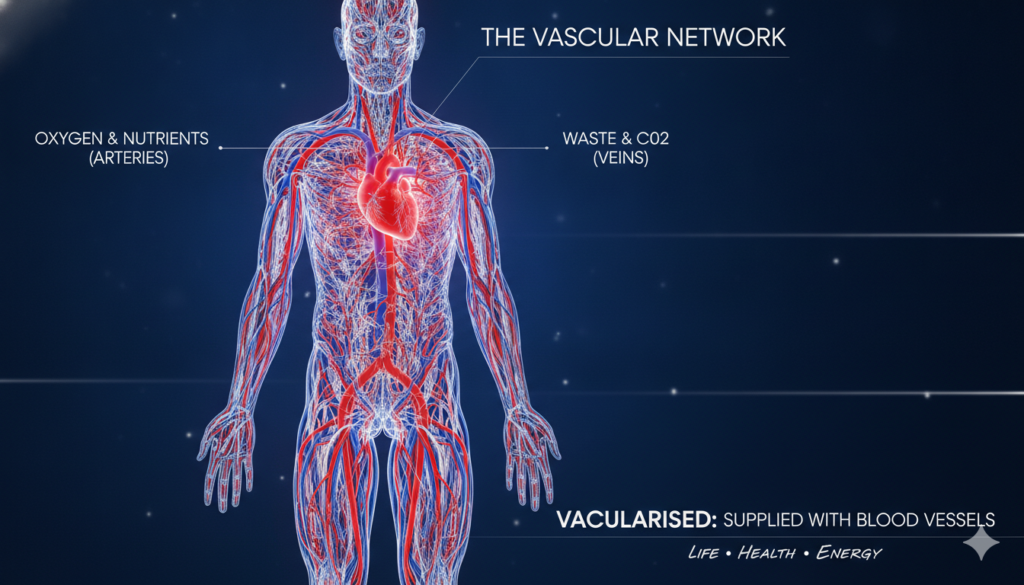

Have you ever wondered how your body stays alive and healthy? Every single part of your body needs food and oxygen to work right. But how do these important things get to your toes, your muscles, and your skin? They travel through a massive network of tiny tubes called blood vessels. Today, we are going to look closely at a big medical word that doctors use all the time. We will explore the true meaning of vascularised and see why it is so important for your everyday health. It might sound like a hard word from a science textbook, but it is actually very simple once you break it down.
When something is described as vascularised, it simply means that it has a lot of blood vessels running through it. Think of your body as a big, busy city. The blood vessels are like roads, highways, and streets. A area that is vascularised is like a busy downtown center with plenty of roads for cars to travel on. Without these roads, resources cannot arrive where they are needed most. Your organs and tissues depend on this continuous flow of traffic to survive and repair themselves every day. By understanding the meaning of vascularised, you can better understand how your body grows, fights off injuries, and keeps you feeling strong.
What is the Simple Meaning of Vascularised?
To truly grasp the meaning of vascularised, we should look at how the human body builds its internal map. In plain language, when a piece of tissue is vascularised, it means it is fully equipped with its own built-in blood supply system. This network includes tiny capillaries, thin veins, and strong arteries that carry fresh blood back and forth every second.
Your body is an amazing machine that never stops working, even when you are fast asleep. If a tissue lacks these blood tubes, it cannot get the oxygen it needs to stay alive. Therefore, the meaning of vascularised is all about connection and life support. It tells us that a specific part of your body is actively connected to your main bloodstream and is receiving constant nourishment.
The Role of Blood Vessels in Your Body
Blood vessels are the magical tubes that make the meaning of vascularised come to life. They act as a delivery service that never takes a day off or comes late. Arteries carry fresh oxygen away from your heart to your muscles, while veins bring the used blood back to be cleaned.
Without these pathways, your cells would run out of energy very quickly. When a doctor says a tissue is well-vascularised, they are happy because it means the delivery routes are open and working perfectly. This vast network ensures that every corner of your body gets exactly what it needs to thrive.
Why Is a Good Blood Supply So Important?
A healthy blood supply is the secret key to energy, growth, and daily survival. When we talk about the meaning of vascularised, we are talking about keeping your body parts fueled up and ready for action. Blood carries special nutrients, vitamins, and defensive cells that protect you from getting sick.
If an area of your body has a poor blood supply, it can become weak, cold, and easily damaged. Being highly vascularised means that your organs have a constant shield against trouble. It allows your body to clean out waste products quickly so that everything stays fresh and runs smoothly.
How Does Vascularised Tissue Heal Itself?
Have you ever scraped your knee and watched it heal up over a few days? That amazing recovery happens because your skin is deeply vascularised. The meaning of vascularised becomes very clear when you look at how wounds close up and mend.
[Injury Occurs] ---> [Blood Vessels Deliver Healing Cells] ---> [New Tissue Grows]
When you get a cut, your blood vessels immediately send special helper cells to the injury site. These helpers stop the bleeding and start building fresh, healthy skin layers. Because the area is vascularised, the building blocks for repair are delivered right to the spot without any delay.
Examples of Highly Vascularised Organs
Some parts of your body need a lot more blood than others because they work extra hard. For example, your brain, your liver, and your kidneys are highly vascularised organs. They require a non-stop stream of oxygen to help you think, digest food, and clean your blood.
| Organ | Level of Blood Supply | Main Function |
| Brain | Extremely High | Controls thinking, movement, and feelings |
| Liver | High | Cleans out toxins and processes food nutrients |
| Kidneys | High | Filters waste products out of your body |
| Skin | Medium to High | Protects the body and controls temperature |
| Cartilage | Very Low | Cushions joints but heals very slowly |
As you can see from the table, the meaning of vascularised matches up with how busy an organ is. The harder an organ works, the more blood vessels it needs to get the job done right.
What Happens When Tissue Lacks Blood Vessels?
On the flip side, some parts of your human body are not vascularised at all, or they have very few blood vessels. A good example of this is your cartilage, which is the flexible stuff in your joints and nose. Because cartilage is not highly vascularised, it takes a very long time to heal if it gets hurt.
Understanding the meaning of vascularised helps us see why a torn muscle heals faster than a sprained joint. Muscles have tons of blood flowing through them every single day. Cartilage has to slowly absorb nutrients from nearby fluids, which makes its recovery process much slower and more difficult.
The Process of Angiogenesis Explained
Your body can actually grow brand-new blood vessels when it needs them, which is a process called angiogenesis. This process shows the active meaning of vascularised in real-time. When your body detects that an area needs more oxygen, it sends out a signal to grow new pathways.
This happens when you exercise a lot and your muscles grow bigger and stronger. Your body responds by making those muscles more vascularised to support your new athletic activities. It is like adding extra lanes to a busy highway so that more traffic can move along without slowing down.
How Doctors Check for Vascularised Areas
Doctors use special tools and clever tests to see if a tissue is properly vascularised. They might use an ultrasound machine, which uses sound waves to look at the blood flowing through your veins in real-time. This helps them check if your organs are healthy and getting enough food.
Learning the meaning of vascularised helps patients understand why doctors run these important scans. If a doctor sees that an area is beautifully vascularised, they know that the tissue is alive, healthy, and working exactly the way nature intended.
Medical Treatments and Blood Vessel Growth
Sometimes, modern medicine needs to step in to help areas become more vascularised. For instance, if someone has a bad burn, surgeons can use special skin grafts to help new blood vessels grow into the damaged area. This helps the new skin bond with the body and stay healthy.
This is why knowing the meaning of vascularised is so vital for modern medical science. By creating treatments that encourage blood vessel growth, doctors can save limbs, heal deep wounds, and help people recover from serious accidents much faster.
Simple Summary of the Meaning of Vascularised
To wrap it all up into a neat package, the meaning of vascularised is simply having a rich and active supply of blood vessels. It is the body’s way of ensuring life-giving blood reaches every single cell. From your hard-working brain to your healing skin, being vascularised is a wonderful thing.
Next time you hear a doctor use this big science word, you can smile knowing it just means an area has great blood flow. It is all about transport, life, and health. Keeping your heart strong through movement and good food helps keep your entire body perfectly vascularised and full of energy!
Frequently Asked Questions
What is the exact meaning of vascularised in simple words?
The simple meaning of vascularised is that a tissue or organ has a built-in network of blood vessels. This ensures it receives a constant supply of oxygen and nutrients to stay alive.
Is it good if an organ is highly vascularised?
Yes, it is generally a very good thing! When an organ is highly vascularised, it means it has excellent blood flow. This allows it to work hard, stay healthy, and repair itself quickly if it gets injured.
Which parts of the body are not vascularised?
Parts of your body like your cartilage, the clear cornea in your eye, and the outer layer of your skin do not have blood vessels. They have to get their nutrients from other nearby fluids instead.
Can a body part become more vascularised over time?
Yes, your body can grow new blood vessels through a natural process called angiogenesis. This often happens when you exercise regularly, causing your muscles to need more oxygen and nutrients.
How does being vascularised help a wound heal?
When an area is vascularised, it has open roads for blood to deliver healing cells, oxygen, and nutrients. These building blocks arrive quickly to fix the damage and grow fresh, healthy tissue.