
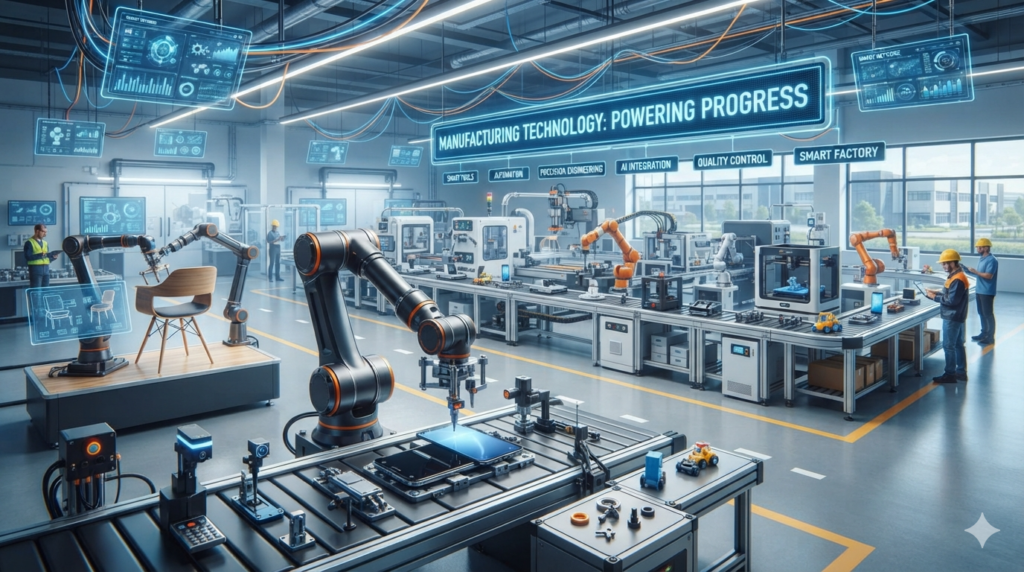

Have you ever wondered how the items in your house are made? From your phone to your chair, these items go through a long journey. This journey is powered by manufacturing technology. Simply put, this field uses smart tools and machines to create products faster and better. It is like the nervous system of a factory. By using science and engineering, companies can make things with less waste and higher quality. Whether it is a small toy or a large airplane part, this technology helps us build a brighter future.
Manufacturing technology is the backbone of the global economy. It involves using advanced tools to improve how goods are produced. In the past, workers did almost everything by hand. Today, we use machines that talk to each other to get the job done. This shift makes everything more consistent. When we use the right manufacturing technology, we save time and money. It is not just about robots; it is about smart systems that help people work better every single day.
Why Speed and Quality Matter
In our fast world, people want products right away. Manufacturing technology helps companies keep up with this demand. By using industrial automation, factories can run all day without stopping. This keeps quality high because machines do not get tired. When machines work with precision, we see fewer mistakes in the final product. Using this technology allows businesses to be more competitive and keep their customers happy. It is a win for the maker and the buyer.
The Rise of Smart Factories
A “smart factory” is a place where everything is connected. Manufacturing technology allows machines to “talk” to each other using the Internet of Things (IoT). Imagine a machine that tells you it needs oil before it breaks down. That is the power of smart systems. These factories are very efficient because they learn from data. They use real-time data analytics to fix problems before they even start. It is like having a super-smart assistant in the factory.
Using Robotics to Help People
Robots are a big part of manufacturing technology. They handle dangerous or boring tasks that people might find tiring. For example, some robots move heavy items safely across the floor. Collaborative robots, or “cobots,” work side-by-side with humans. They take care of the repetitive parts, letting people focus on creative work. This teamwork makes the workplace safer and more fun for everyone involved. It is an exciting time to work in this industry.
How 3D Printing Changes Everything
You might have heard of 3D printing. It is officially called additive manufacturing. Instead of cutting away material, this manufacturing technology builds things layer by layer. It is great for making complex shapes that were once impossible to create. Since it uses only the material needed, it creates very little waste. This makes it a very friendly way to build parts for cars, planes, and even medical tools. It is truly a game-changer for makers everywhere.
The Role of Artificial Intelligence
Computers are getting smarter thanks to artificial intelligence (AI). In factories, AI looks at massive amounts of data to find hidden patterns. This helps bosses make better choices about what to build. Manufacturing technology combined with AI can predict what customers will want next. It also helps in predictive maintenance, which stops machines from failing unexpectedly. AI is like the brain that guides the “muscles” of the factory floor.
Keeping Things Sustainable
We all care about our planet. Modern manufacturing technology is helping us be kinder to the Earth. By using smart systems, factories can use less electricity and water. They also waste fewer raw materials during production. When we use advanced materials that are stronger and lighter, we need less fuel to move products around. Making things the right way is good for business and even better for our environment.
Digital Twins: The Virtual Factory
A “digital twin” is a perfect computer copy of a physical machine or factory. Engineers use manufacturing technology to test ideas on this twin first. If something goes wrong in the digital version, they fix it without hurting the real machine. It is like a practice run before the big show. This reduces risks and makes sure that production goes smoothly from the very first day. It is a powerful way to innovate safely.
Connecting the Digital and Physical
We often call this “IT/OT convergence.” It means that Information Technology (the office computers) and Operational Technology (the factory machines) work as one team. By using manufacturing technology to bridge this gap, leaders get clear insights. They can see exactly how the shop floor is doing in real-time. This connection removes barriers and makes the whole company faster and more agile. It is how modern businesses stay ahead of the curve.
Why We Need Skilled Workers
Technology is great, but it still needs human talent. The new era of manufacturing technology creates exciting new jobs. We need people who can program robots, analyze data, and keep systems running. If you like solving puzzles and building things, this field is perfect for you. Education and training are key to success here. As we move forward, the partnership between humans and machines will only get stronger and more productive.
Detailed Comparison of Key Technologies
| Technology | Main Benefit | Why It Matters |
| Robotics | High Precision | Handles repetitive or dangerous tasks safely. |
| 3D Printing | Less Waste | Allows for complex, custom designs. |
| IoT | Better Insights | Machines communicate for smoother operations. |
| AI | Smarter Decisions | Predicts issues before they stop production. |
| Digital Twins | Reduced Risk | Tests processes virtually to save money. |
Frequently Asked Questions
1. What is the main goal of manufacturing technology?
The main goal is to make products more efficiently, with higher quality, and less waste using modern tools.
2. How does automation help in a factory?
Automation handles repetitive tasks, which keeps production steady and reduces human error during long shifts.
3. Is 3D printing used in large factories?
Yes! Many companies use 3D printing, or additive manufacturing, to create complex parts quickly and save on material costs.
4. What are collaborative robots?
These are robots designed to work safely right next to human workers to help with tasks and boost overall productivity.
5. How does IoT make factories “smart”?
IoT connects machines to the internet, allowing them to share data and coordinate tasks automatically to prevent downtime.
6. Can manufacturing technology help the environment?
Yes, it helps by reducing energy use, minimizing material waste, and allowing for the creation of sustainable products.
Conclusion
Manufacturing technology is changing the way our world works. By embracing these tools, we can make better products that improve our daily lives. Whether through robots, AI, or smart connections, the future of production is bright and efficient. Are you ready to see how these innovations will shape the next decade of making things? Feel free to share your thoughts or reach out if you have questions about how these technologies work!